Why science say Nostalgia could be bad for us
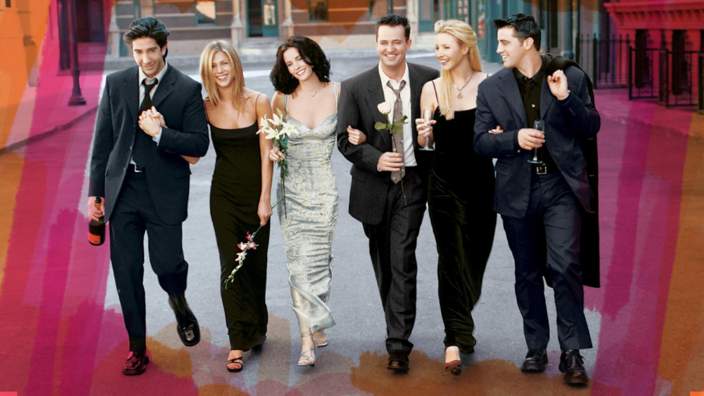
Oh... my... GAWD. Friendsfest is back. Could we BE any more jealous of anyone who actually managed to bag tickets? It's going to be a no-holds-barred nostalgia immersion. We’ve heard rumours of smelly cat karaoke and an actual Central Perk. But all anyone really wants to do is take a photo with the purple door right?
Because
nostalgia is the best. This is hardly news – Friendsfest aren’t the
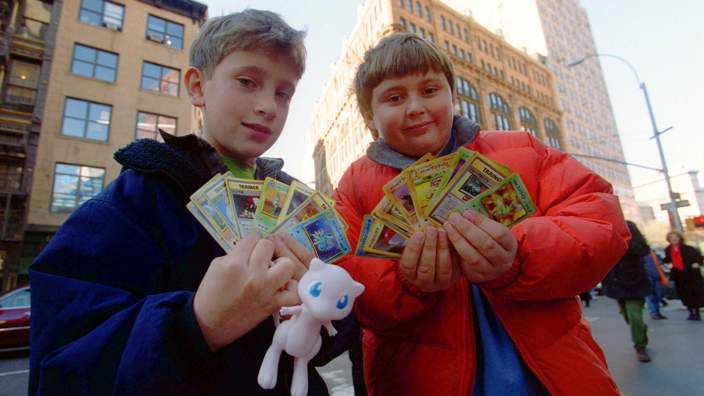
first ones to capitalise on our love for the familiar. Take PokemonGo: a
masterclass in how to take millennial nostalgia and turn it into
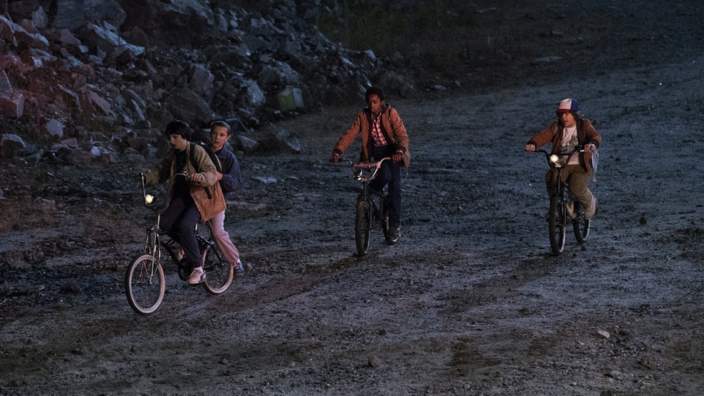
serious cash. Or Stranger Things, which is killing it on Netflix. For
those of you who haven’t seen it (really?) it’s basically Alien, ET, and
The Goonies mashed up in an ode to 80s TV/Spielberg/Stephen King/the
good old days when kids rode bikes and saved the world. Even Power
Rangers are making a comeback, with fans losing it in anticipation
of the comic's return.
Is it us, or do media companies and advertisers really want us to feel nostalgic? If you too were born between 1980 and 2000, you may feel the same.
It’s
not a coincidence. We 'Millennials' (sorry, we won’t say it again) are
ripe for having our memories sold right back to us, and it's not hard to
see why we would be a target. We’re the biggest demographic to hit the
planet since the dawn of demographics, in the prime of our working and
spending years. Also, as the generation that does the most shopping
online - where we also get our news, entertainment and do most of our
socialising - we're the perfect consumers.
Nor is it a secret that companies use nostalgia to increase sales. A study published two years ago in the Journal of Consumer Research
showed that a feeling of nostalgia has an intoxicating way of clouding
our judgement and a powerful "capacity to weaken consumers' grasp on
their money".
Companies are using nostalgia to try to hit the Millennial millions (sorry, that one snuck in). Articles like this one
by Vivian Giang are using such research to explicitly advise companies
to get at our wallets by reminding us of 'happier times'. It makes us
feel more socially connected and optimistic about the future.

But
is buying the Fresh Prince box set and watching re-runs of Friends all
that bad? After all, if it wasn't nostalgia, it'd just be some other
marketing strategy.
Well,
assistant professor Dr Ryan Lizardi of the SUNY Polytechnic Institute
has spent his career studying the media's use of nostalgia, and he
thinks it could be that bad.
He
told us: “In my book 'Mediated Nostalgia', I argue that when nostalgia
is increasingly defined by media companies as the films and shows we
loved in our youth, we are discouraged from connecting with our
individual and collective histories. Instead of encouraging a meaningful
interaction with history, we are encouraged to interact with the newest
remake.”

Dr Lizardi
believes that the more we're encouraged to think back in terms of the
things we consumed, the less likely we are to interact with other,
non-media-related aspects of our history.
In
support of his book's theory, Dr Lizardi points to an argument made by
historian Hayden White, who said that looking at the past simply for the
sake of looking is 'thoughtless obstructionism' - a superficial
exercise that gets in the way of any useful, present-focused approach to
history. And though Lizardi admits that White wasn't referring directly
to the media, all this nostalgic rehashing, lucrative as it may be for
some - what is it if not the uncritical reproduction and consumption of
the old in place of something new?

Dr Sedikides
and Dr Wildschut are psychologists who've been studying nostalgia at
the University of Southampton. They think that , rather than being
obstructive, nostalgia is actually a blessing, and suggest: "Far from
being a feeble escape from the present, nostalgia is a source of
strength, enabling the individual to face the future."
After
inducing nostalgia in participants using smells, lyrics, music, and by
asking participants to recall and record positive memories, researchers
were able to measure future relevant traits like creativity,
inspiration, optimism, and positive social behaviour. They found that,
compared to a control group, these traits were heightened in the
nostalgic participants.
The
psychologists concluded: "Nostalgia may refer to the past, but it is
surprisingly forward looking. It links and assimilates one's past with
one's present and, crucially, one's future.

If
we really are increasingly encouraged to think of our pasts in terms of
films, bands and general stuff so that we can be sold and resold that
stuff, is it not possible that we will, in turn, begin to think back to
our pasts in terms of that stuff too?
In one study
that examined the effects of advertising on memory, researchers found
that even childhood memories could be manipulated when participants were
presented with false cues.
“The
very fact that advertising cues may serve as frames to alter past,
current, and future experience is not surprising in light of current
research on memory.”
So
it's clear that our pasts are capable of being distorted by the people
trying to flog us tickets to the past. But as to the accuracy of
Dr Lizardi's theory that the media's current version of nostalgia might
overtake, and to some extent eventually displace our memories - that
we're yet to find out.
Though
a few things are clear. Nostalgia is a powerful and generally positive
human condition. It gives us strength. It allows us to access a positive
image of our past and use it to position ourselves favourably in
relation to the future. But as with all human emotions, advertisers are
keen to synthesise nostalgia to reap its benefits in the form of
currency. Meaning it's quite possible that our view of the past will at
least be coloured by the version of that past as advertised by the
media.
Is
that okay? Is that a bad thing? Do you care? Well, that's down to you.
But you have to admit, a day pretending to be Ross screaming
“PIVOT…PIVOT” sounds pretty fun, no?
Source:http://www.bbc.co.uk/bbcthree/item/eb2af3d2-ae87-4d6c-84ea-4f9f8e5d4857
Source:http://www.bbc.co.uk/bbcthree/item/eb2af3d2-ae87-4d6c-84ea-4f9f8e5d4857
 tripleclicks.com


No comments:
Post a Comment